
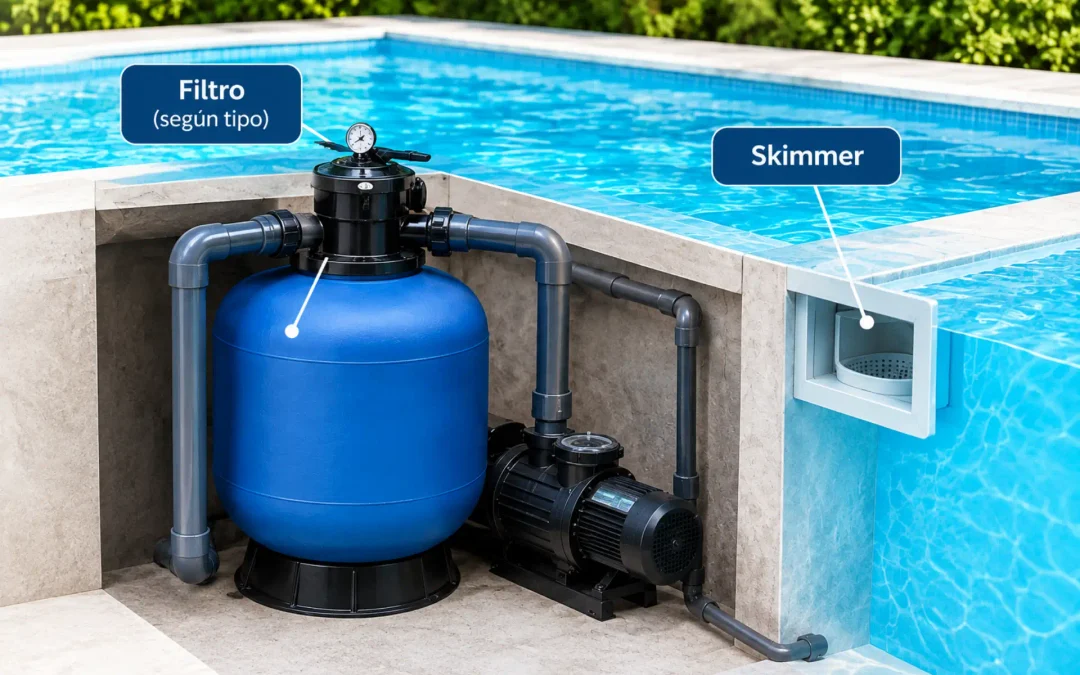
The filter and the skimmer are responsible for keeping the water clean on a daily basis: they trap particles, leaves, and impurities before the water returns to the pool. When either of them fails, the symptoms quickly become apparent—cloudy water, a bad odor, or debris that no longer clears up on its own.
In this guide, we review how to identify a fault in the filter or skimmer, their most common causes, and when it is worth repairing rather than replacing them.
Signs that the filter or skimmer needs checking
- Gauge pressure above normal
- Cloudy water despite adequate filtration time.
- Sand or filter media debris on the pool floor
- The skimmer does not pull in leaves or surface debris.
- Increasingly long filtration cycles to achieve the same result.
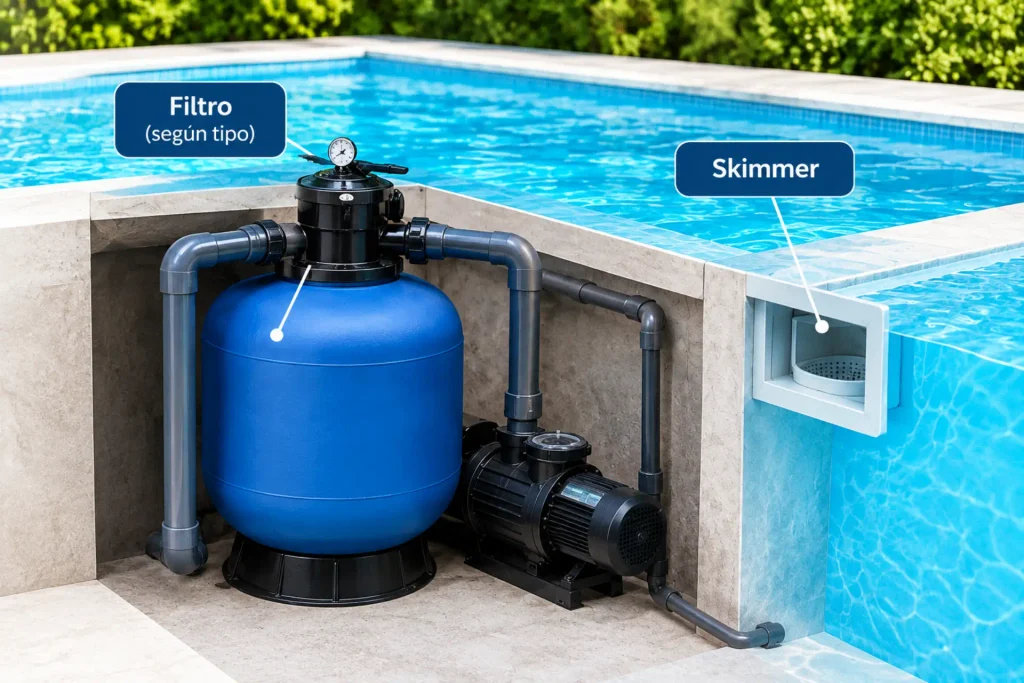
Types of filters and their most common failures
Sand filter. The most common issue is channeling within the sand bed (where water carves paths through specific areas instead of filtering evenly), in addition to wear and tear on the multiport valve from use.
Cartridge filter. It typically fails due to cartridge clogging (requiring periodic cleaning or replacement) or damage to the filter housing seals.
Diatomaceous earth filter. Less common in residential installations, but failures are usually due to tears in the filter fabrics or inadequate air purging.
Most common skimmer malfunctions
- Broken lid or basket, allowing leaves and large debris to pass into the circuit.
- Skimmer opening clogged or water level incorrectly adjusted, reducing suction.
- Cracks in the housing, causing small leaks around the skimmer itself.
Repair or replace?
Sand clogging or channeling: resolved by cleaning or backwashing—no need to replace anything.
Worn or seized multiposition valve: normally it is enough to replace the valve, not the entire filter.
Cracked filter body or structural leaks: in this case, it is worth considering a complete replacement, especially if the equipment has already been in use for several years.
Preventive maintenance
Periodic backwashing (weekly during peak season) and checking the skimmer basket prevent most of these issues before they arise. Checking the pressure gauge every few weeks allows for the detection of a gradual rise in pressure before filtration efficiency is compromised.
Frequently Asked Questions
How often should the filter sand be changed?
As a general guideline, every 3–5 years, depending on usage and the frequency of backwashing.
Why does the water remain cloudy even though the filter is clean?
It could be due to insufficient filtration time, a chemical imbalance in the water, or a pump malfunction that reduces the flow rate reaching the filter.
Can I clean the cartridge myself?
Yes, rinsing it with a hose is simple and recommended on a regular basis. If the cartridge is badly damaged or broken, it is best to replace it.
Does the skimmer require maintenance separate from the filter?
Yes—emptying the basket regularly and ensuring the lid closes properly prevents many of the most common issues.
Is your filter or skimmer not working as it should? At JM Cifre Piscinas, we diagnose and repair pool filters and skimmers in Mallorca.